
(2).png "Laboratório Malária UFMG")
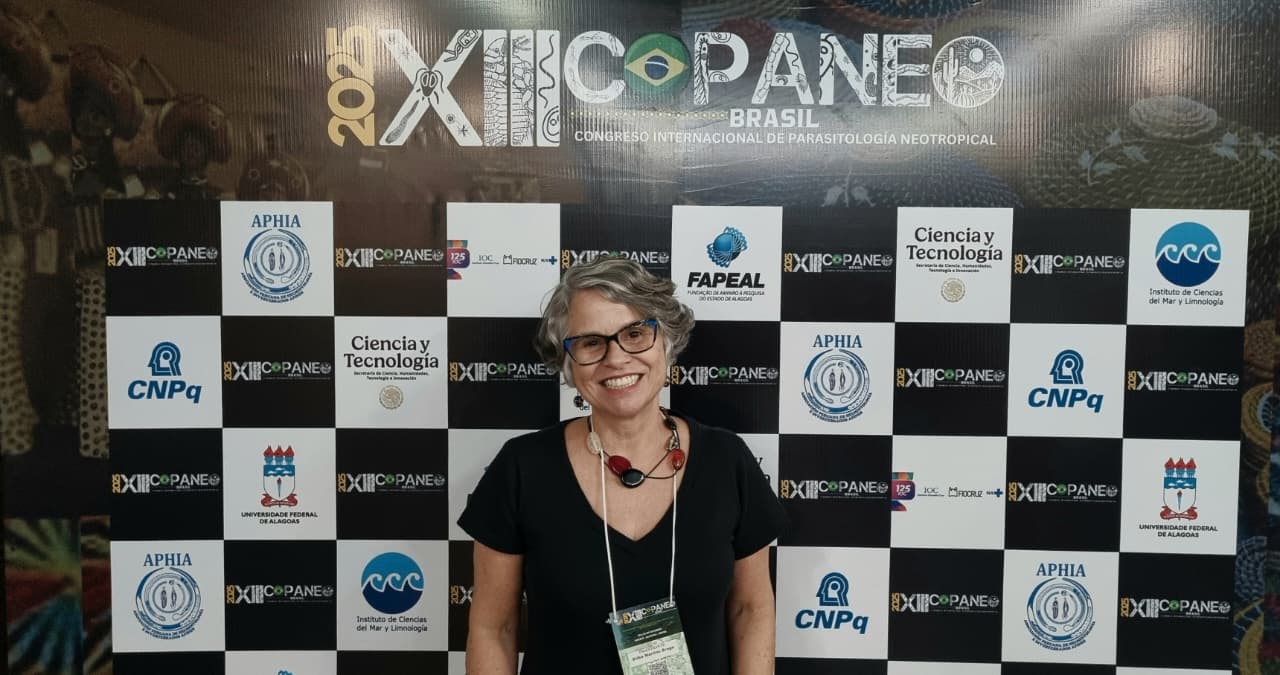
Prof. Érika M. Braga (Department of Parasitology/ICB-UFMG) during COPANEO
Distribution and diversity of hemosporidia infecting wild birds in different Brazilian biomes.
The Interdisciplinary Malaria Studies Group (GIEM) at UFMG participated in the International Congress of Neotropical Parasitology (COPANEO), presenting a comprehensive panel on the distribution and diversity of hemosporidia in wild birds inhabiting different Brazilian biomes. The conference was led by Prof. Érika M. Braga (Department of Parasitology/ICB-UFMG), who synthesized two decades of continuous research by the group.
The study brings together more than 10,000 birds analyzed in the Cerrado, Atlantic Forest, and Caatinga biomes, focusing on the morphological and molecular characterization of protozoa of the order Haemosporida — especially the genera Plasmodium and Haemoproteus, and, more recently, Leucocytozoon. The results indicate high parasitic diversity, closely related to the complexity of the ecosystems and the variation of hosts.
The team highlighted the use of an integrative approach, combining classical taxonomy with mitochondrial markers and complete mitochondrial DNA sequencing, which has enabled the description of new hemosporidian species in the country. In parallel, GIEM investigates biotic and abiotic factors that modulate the occurrence and distribution of these parasites, offering a more precise picture of the transmission dynamics in each biome.
According to the coordination, the progress achieved deepened the understanding of parasite-host interactions and provides practical support for management and conservation strategies for wild birds. “Brazil, with its richness of birds and vectors, is a natural laboratory for understanding how habitat influences the circulation of these pathogens. Transforming this knowledge into conservation policies and practices is our priority,” said Professor Érika Braga during the presentation.
With its participation in COPANEO, GIEM reinforces its commitment to the production of open science, methodological rigor, and applied impact, consolidating itself as a regional reference in the study of avian hemoparasites and their implications for neotropical biodiversity.
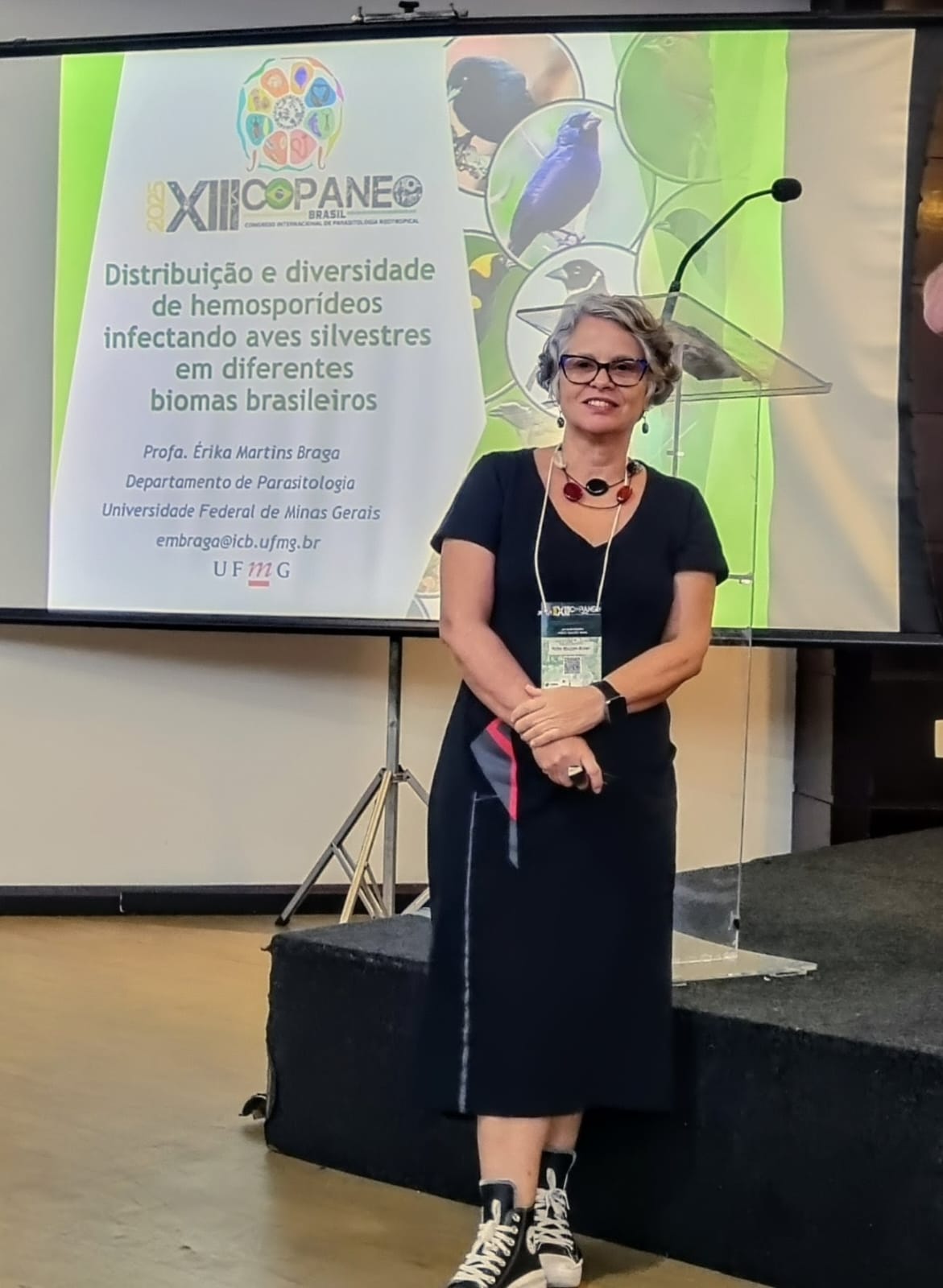
Professor Erika during her presentation “Distribution and diversity of hemosporidia in wild birds inhabiting different Brazilian biomes”.